
Who Can Make a Fallen Private Power Pole Safe in Sydney? What to Check Before You Call
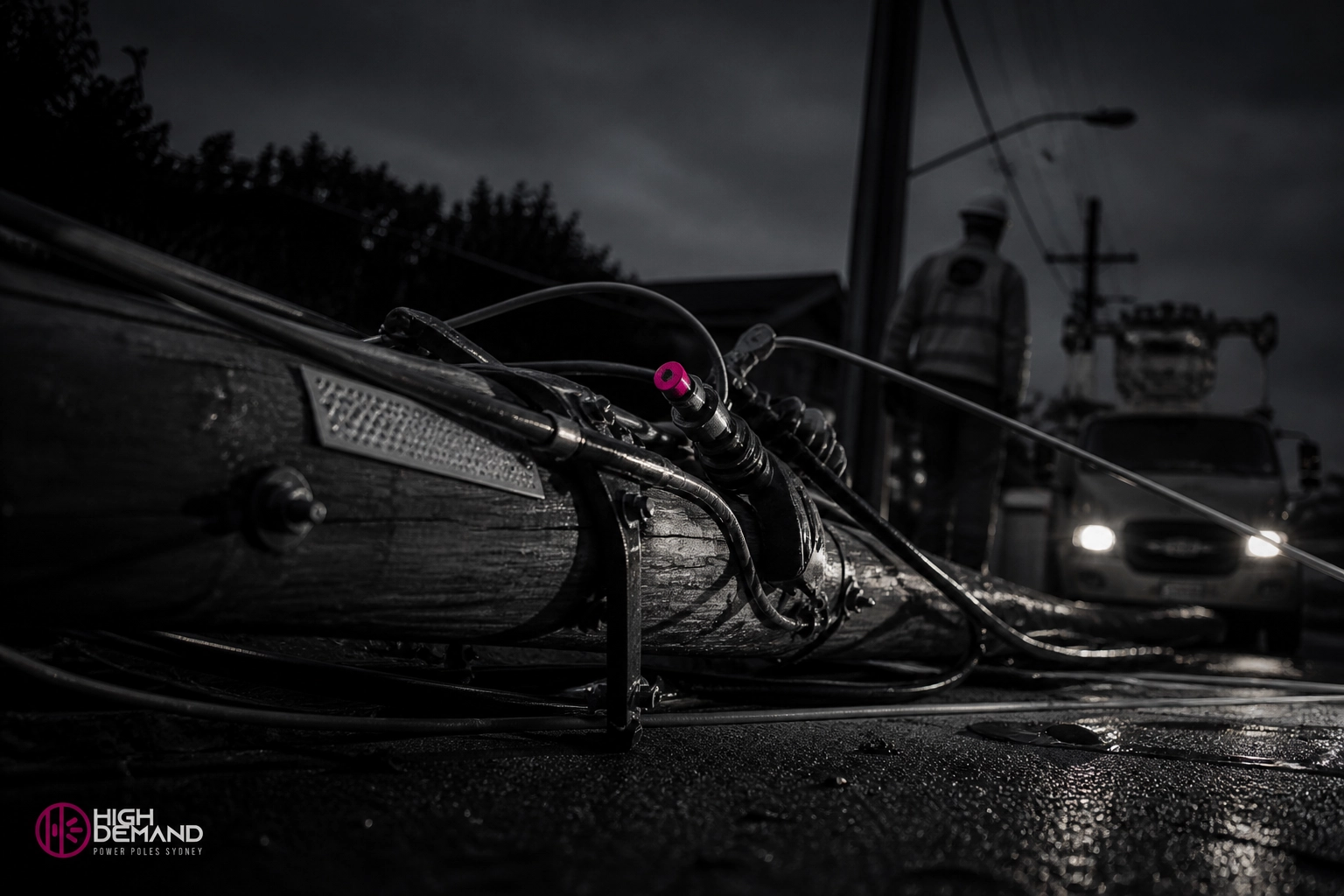
A fallen power pole on your property is not a wait-and-see situation. Live wires, cracked timber, and unstable ground can turn a simple cleanup into a serious safety risk, and the person you call matters as much as how quickly you call them. If you own property in Western Sydney or the inner suburbs, the real question is not whether someone can remove the pole, but who is legally qualified to make it safe. The short answer: you need a licensed electrical contractor with the right accreditation, not a general trader.
This guide explains who can legally make a fallen private power pole safe in Sydney, how to tell whether the pole is yours or Ausgrid's, and what to do before anyone arrives. You will also learn what Level 2 ASP means, the four checks to run before booking, including licence, insurance, real experience with private poles, and scope such as replacement, possum guarding, and overhead-to-underground conversion. HD Power Pole Sydney, a licensed Level 2 ASP contractor serving Parramatta, Blacktown, Fairfield, Newtown, and Wiley Park, handles this work, and the checklist below helps you verify any provider before you commit.
Who Can Legally Make a Fallen Private Power Pole Safe in Sydney?
A fallen private power pole is electrical infrastructure, so it should be made safe and repaired by a licensed electrical contractor operating as an Accredited Service Provider (ASP). Verify any contractor's claim on the NSW ASP scheme and contestable works page before booking. If the pole turns out to be an Ausgrid network asset, Ausgrid's reporting route is your first call, not a private contractor.
That scheme sits inside a wider regulatory picture: NSW regulates who may work on the electricity network side of an installation, so the scheme page is the source to check, not a contractor's word. Work done outside those rules can leave the installation non-compliant, delay a new connection or re-energisation, and complicate an insurance claim if the pole later fails or causes damage. The same rule applies to private overhead lines on rural blocks.
Is the Fallen Pole Yours or Ausgrid's? How to Tell Before You Call
The legal answer only applies once you know whose pole it is. Responsibility generally shifts where the network ends and your private mains begin, often at a private pole or the point of supply. If you are unsure, confirm that boundary with Ausgrid rather than assume it.
Check the footpath first:
Does the pole stand inside your property boundary?
Does it carry one service line or several?
Does its line run to a neighbouring property, a street pole, or a meter box across a yard?
Then check documents: subdivision plans, survey documents, previous electrical paperwork, strata or body corporate records, and any network correspondence about the connection point. Our power pole checklists can help you record what you find.
Ownership is often unclear on battle-axe blocks, duplexes, granny flats, carry-over service lines to a rear dwelling, and subdivisions where one private pole supplies more than one home, so confirm that boundary with Ausgrid before you call anyone out.
Do Not Touch It: Making the Site Safe Before Anyone Arrives
Whatever the ownership answer, assume every fallen pole, stay wire, service line and length of conduit is live or could become live. This holds even if lights inside work, or the property has lost power.
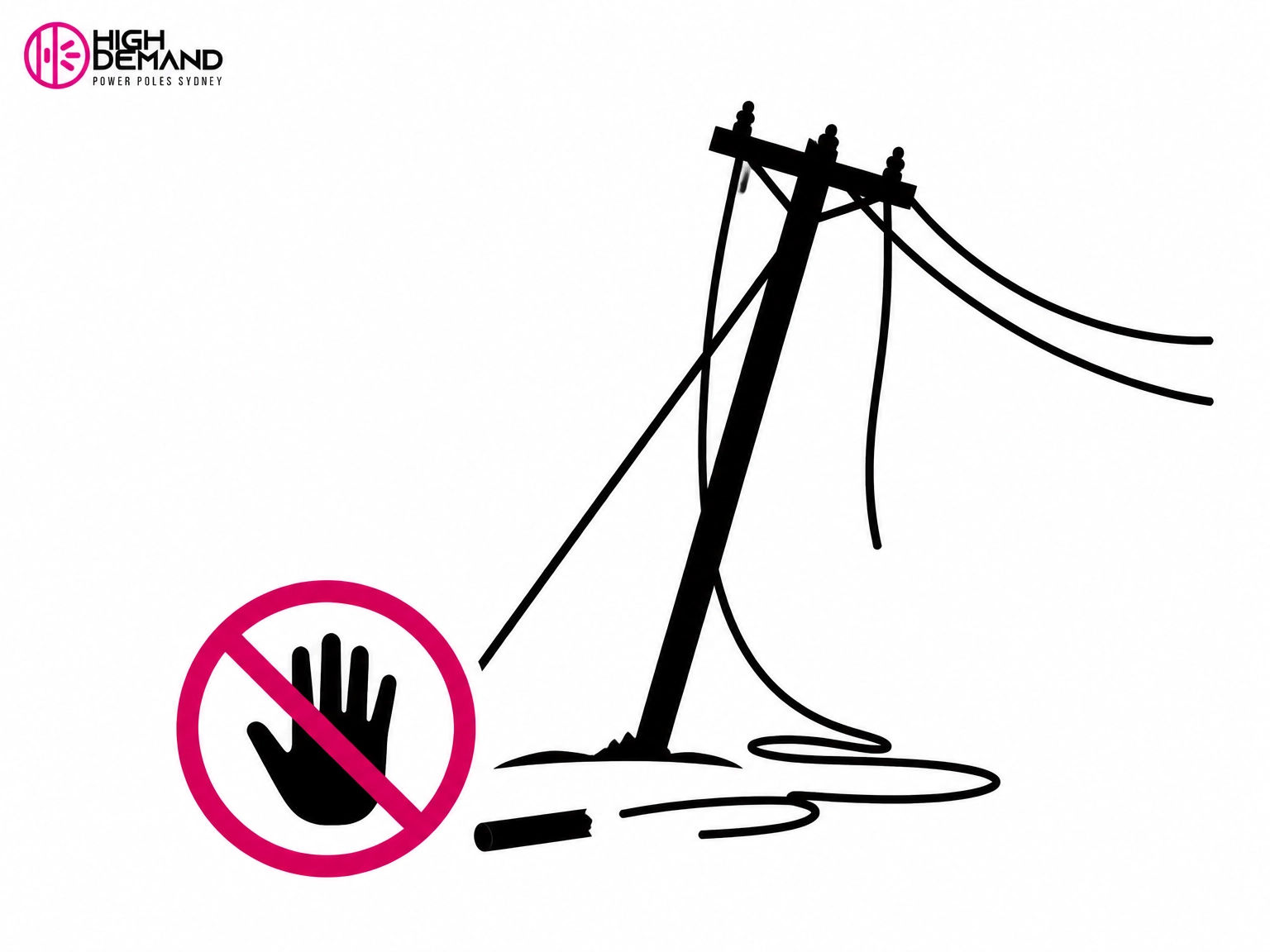
Do not touch, lean on, tie off, cut, drag, prop or chain anything to the pole. Do not move branches resting on it, and never let anyone lift the pole clear of a car or driveway.
Keep people, pets and vehicles well back. If the pole is near a footpath, driveway or shared access way, place a barrier or station a person at the boundary. For conductors, plant and exclusion zones, follow Ausgrid's working near powerlines guidance, not guesswork.
A fallen private pole brings its own hazards, from an exposed service line at reach height to a stay wire that may become live, damaged consumer mains at the meter box, and the risk of the pole rolling or its top section dropping further. Once the scene is secure, arrange make-safe work on private poles through a qualified contractor.
Escalate for sparking or arcing conductors, smoke or burning smells, a pole across a footpath, driveway or roadway, or any contact with a vehicle or structure. Call the network emergency line or the emergency services number first. Repair comes second.
What Level 2 ASP Means and Why It Matters Here
Once the site is clear, the next question is who is actually allowed to do the work.
The NSW Government publishes a page on the Accredited Service Provider (ASP) scheme and contestable works, which sets out how providers are accredited to carry out work on the electricity network. The levels are not a ranking; each one describes the classes of contestable work a provider is accredited for. So the useful question is not whether someone is an ASP, but whether their accreditation covers work on a private pole.
An electrical contractor licence, a builder's registration and an ASP accreditation are separate things. A general trades or builder's licence is not a substitute for network accreditation on infrastructure work.
Rather than accept a verbal claim, ask which ASP level the provider holds and check it against the NSW ASP scheme information and Ausgrid's ASP and contractors pages. A licensed Level 2 ASP contractor should be able to show this without hesitation, and our licence and accreditation details show the format to expect.
Check 1: Licence, Accreditation and Insurance
Before booking, ask for four things by name:
the electrical contractor licence number
the ASP accreditation number and level
a certificate of currency for public liability cover
the name of the person who will supervise the work on site
Then verify. Cross-check the licence and ASP claims against the NSW ASP scheme page and Ausgrid's industry pages. A claim is not evidence.
Ask whether the quote comes from the licensed contractor attending your site or from a booking platform or subcontractor. A business name on a quote is not the same as an accredited provider arriving with the right authorisation.
Request a written scope and a written certificate of compliance. Vagueness about insurance, supervision or certification is a warning sign, not a minor paperwork gap.
Keep copies of everything: a PDF scope, licence details and completion certificate are what an insurer or a future buyer will ask for. Have them ready, and check the contractor's service and licensing information before you book.
Check 2: Real Experience With Private Poles
Ask how many private pole replacements the contractor completed in the last 12 months, not just service line repairs, and how many were in your suburb. General electrical experience is not the same as pole experience.
Ask them to walk you through what they typically find when a private pole fails locally: base rot, termite damage, corrosion at the base plate or stays, undersized or aged poles, and sagging or possum abrasion along the service line.
Access is the next test. Can they work in tight side access, narrow battle-axe driveways and strata car parks, and what plant do they use to remove and set a pole without damaging paving or landscaping?
Request two local references with suburb names and check the addresses against Western Sydney and inner-suburb locations. Local network familiarity counts as much as general electrical work; choosing the right private pole installer usually comes down to this track record.
Finally, note that an electrician whose work is mostly switchboards, lighting and power points may lack the accreditation, plant and network paperwork habits a pole job requires.
Check 3: Scope, Replacement, Possum Guards and Undergrounding
With experience confirmed, the next test is scope. Get the scope in writing. Making the pole safe, removing it, supplying and installing a new one, and reconnecting the service line are four separate jobs with separate costs, so confirm which are included.
Ask which material suits your site. Timber is traditional, while composite fibreglass or resin poles are an alternative. Soil, vegetation, previous termite damage and future subdivision or building plans should drive the choice.
Possum traffic along service lines is a common reason private poles and lines fail. Ask who supplies the guard and whether it is a humane rotating possum guard that lets possums pass rather than blocking them.
If the pole is failing or you are developing, raise overhead-to-underground conversion early. Trenching, conduit, pole removal and network paperwork may need scheduling with the pole work, not after it.
Pin down restoration and extras: backfill, turf or paving reinstatement, spoil removal, driveway crossings, and whether a new connection point or metering arrangement is included.
HD Power Pole Sydney, a licensed Level 2 ASP electrical contractor serving Parramatta, Blacktown, Fairfield, Newtown and Wiley Park, lists private pole installation and replacement, composite fibreglass and resin poles, humane rotating possum guards, and overhead-to-underground conversion with trenching, conduit, pole removal and Ausgrid-compliant paperwork.
Check 4: Paperwork, Approvals and Who Deals With Ausgrid
Paperwork is where a private pole job is won or lost. Before booking, ask directly:
Who lodges the network paperwork, prepares network-compliant documentation, and raises any connection, disconnection or supply interruption request?
Ausgrid's ASP and contractors pages set out how accredited providers work with the network.
Are approvals, inspections and the certificate of compliance included in the quote? Who issues them, and when will you receive copies?
How long does approval usually take? What must you sign or supply? What site access is needed, whether anyone must be home, and will power be off for part of the day?
If the network requires changes at the connection point, who pays? Is that inside the quote or a variation?
Get every answer in writing. An electrician working outside the accredited network process may make the pole safe but leave the network side incomplete, delaying reconnection. Confirm the full disconnect and reconnect process before work starts.
Three Questions to Ask on the Phone
Once you have the paperwork answers above, use these three questions to compare the contractors you shortlist.
Licence and accreditation: Are you a licensed electrical contractor and an accredited service provider at a level covering private pole work? Can you give me those numbers now so I can check them?
Track record: How many fallen or failed private poles have you replaced in the last year? Can you provide two local references I can call?
Scope and paperwork: Does your quote cover making the site safe, replacing the pole, the possum guard and all network paperwork, and who lodges that paperwork?
Ask for the answers in writing, in the quote and by email, not verbally. That puts the scope, licence details and inclusions on the record.
Red Flags That Should End the Conversation
Even a confident phone manner can hide a problem. Walk away if you see any of the following.
No numbers in writing. If a contractor will not hand over their electrical licence or ASP accreditation number before you book, end the conversation there.
The wrong trade on the tools. A handyman, landscaper, rubbish removalist or tree lopper offering to pull the pole out, cut it up or make it safe is not an accredited provider, whatever the price.
A partial quote. Making the pole safe is not the whole job. If removal, replacement, reconnection and the network paperwork are missing from the quote, the stated price is not the final price.
Cash only, no written scope. Treat this as serious, especially if they also push you to start work before the network has been contacted while pole ownership is still unclear.
Vague answers. Ask who supervises the site, what insurance is held, and what happens if the network rejects the completed work. Evasion on any of the three is your answer.
Any single red flag is enough to keep looking.
Conclusion: Your Next Step After the Pole Comes Down
Private pole work is electrical infrastructure work, so it belongs with a licensed electrical contractor holding the right ASP accreditation, never a general tradesperson. And if the pole may be an Ausgrid asset, report it first and let the network decide before you book any private-side repair.
Three actions today:
Keep everyone clear of the pole and anything attached to it.
Get two written quotes that itemise the make safe, the replacement and the network paperwork separately.
Check both contractors' licence and accreditation numbers on the NSW ASP scheme page before you book.
If you would rather test them on the call, put those same points to each contractor directly: are you licensed and accredited at a level covering private pole work, how many have you replaced locally, and does the quote cover the make safe, the new pole, the possum guard and all network paperwork?
A compliant contractor answers without hesitation and confirms every answer in writing.
Need a Level 2 ASP for your private power pole? Call the High Demand Power Poles Sydney team for a free quote.
Call 0411 719 093Related reading
Ready to get your power pole sorted?
Fill out the form and our expert team will get back to you shortly. Whether it’s an emergency or a planned installation, we’re ready to help: fast, safe, and professional.