
Temporary Builder's Supply: Powering a Site Before the Pole
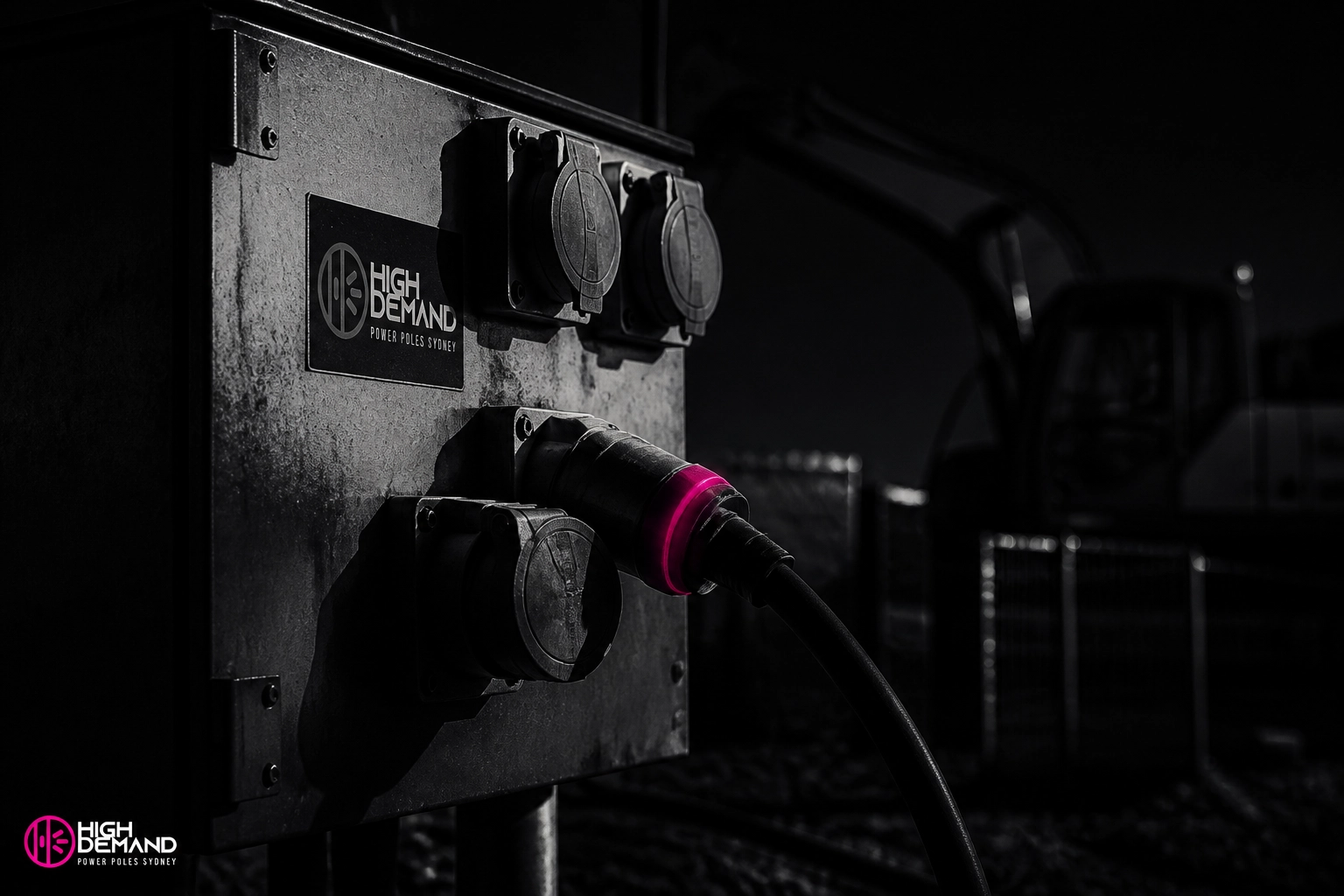
Before ground is broken, a construction site still needs a safe, reliable power source. Temporary builder's supply is how many projects bridge the gap between an active work site and a permanent electrical connection. Getting it right early helps avoid delays, failed inspections and costly rework.
This guide walks through what temporary builder's supply actually is and the general sequence for powering a site before the permanent pole goes in. It then explains what the NSW Service and Installation Rules mean for your obligations, how temporary supply differs from a temporary service pole, and why confirming the correct distributor for your site is essential. You will also see the paperwork, licensing and checks to complete before work starts, plus common sequencing and compliance mistakes that slow projects down. The post closes with practical next steps so you can plan site supply before you break ground, with the correct network for suburbs such as Parramatta, Blacktown, Fairfield, Newtown and Wiley Park confirmed first.
What Temporary Builder's Supply Actually Is
Temporary builder's supply is a short-term electrical arrangement that gives a construction site usable power before the permanent service point and pole are energised. It runs tools, lighting, site amenities, a site office and safety or security systems during that gap.
The sequence exists because concreting, framing, scaffolding, fit-out and site security all need power long before the permanent supply is ready. The temporary arrangement carries the project through that window so trades are not held up waiting on the network.
The chain at a high level: connection, electrical work by an accredited service provider, energisation, then the transition to permanent supply. Forms differ, though. Powering a duplex site, for example, can involve a different supply method and point of connection than a standalone dwelling, which is why the arrangement follows the site rather than a template.
It is not simply hiring a generator. Temporary builder's supply is a regulated connection step, and generators or other on-site sources may supplement it depending on the work stage.
Forms vary by site and distributor, so treat this as the map rather than a fixed procedure, with your distributor and accredited service provider confirming the detail.
The General Sequence: How a Site Gets Power Before the Permanent Pole
With the map in place, here is the sequence a builder can generally expect. Treat it as practice, not a fixed procedure: the granular detail of temporary supply applications is not uniform across distributors.
1. Confirm the serving distributor. Which distributor you deal with shapes the application, forms, fees and response times. Distribution boundaries cross suburb lines, so confirm the specific street address before naming anyone in a tender or programme.
2. Lodge the connection application. Distributors publish their own connection pathways, including a route for requesting a new connection. This is where the request for site supply begins.
3. Engage an accredited service provider. They perform the electrical work and handle the associated network paperwork as your representative. Agree scope and responsibility in writing before mobilising.
4. Install, energise, then transition. The temporary arrangement is installed and energised, carrying the site through construction. Later, once the pole, mains and metering go in, supply transitions to permanent. Depending on the site, interim pole work can involve core-hole drilling for poles, followed by removal or reuse of the temporary arrangement.
Because no two networks publish identical requirements, ask your distributor directly what it needs for your address rather than assuming one process fits every site.
What the NSW Service and Installation Rules Mean for You
Those distributor pathways sit inside a broader framework: the NSW Service and Installation Rules. This recognised industry code sets out what distributors require when connecting a customer to New South Wales distribution systems, reflecting the Electricity Supply Act 1995 and Chapter 5A of the National Electricity Rules.
Because the Rules set minimum standards for safe, reliable and efficient connection services, they shape what you can and cannot do at the connection point. They also define the boundary between your electrical contractor's scope and the distributor's network, including work such as upgrading consumer mains and the point of attachment when a permanent supply replaces a temporary arrangement.
The liability point is the one builders overlook. Compliance with the Rules does not necessarily ensure satisfactory operation of the installation, and the contractor remains responsible for any additional work needed to make it operate satisfactorily. Minimum compliance is a floor, not a finish line, so allow budget and programme time beyond it.
Expect requirements to track distributor expectations closely. The committee behind the Rules included Ausgrid, Endeavour Energy, Essential Energy, NSW Fair Trading, NECA's NSW and ACT chapter, and electrical contractor and Accredited Service Provider representatives.
Finally, a currency check. The widely cited edition is dated July 2018. Before quoting any clause in a tender or programme, confirm with the NSW Department or your distributor whether a newer edition or amendments have been issued.
Temporary Supply Versus a Temporary Service Pole
That compliance framework explains why terminology, not just technical detail, needs settling early. "Temporary supply" and "temporary service pole" are often used interchangeably on site, yet they describe different arrangements.
Some blocks can be supplied from an existing network point: the builder's supply is connected and metered with no new pole. Where no suitable point exists within reach, an interim pole or overhead arrangement carries the load until the permanent structure and pole go in. If the interim arrangement will later be cut over or removed, plan the disconnection and reconnection as part of the programme rather than an afterthought.
What drives the difference is site specific:
distance from the block to the network
infrastructure already available nearby
site access and the equipment needed to reach the connection point
subdivision layout and neighbouring crossings
whether the final design is overhead or underground
Because those variables change from block to block, an accredited service provider assesses the site against the distributor's requirements rather than applying a template.
Treat the temporary versus interim pole question as something to raise with your provider and distributor at the planning stage. Do not design around a fixed rule before the site is assessed. Ask early whether the interim arrangement will be removed, reused or converted when the permanent pole and mains go in, because that decision affects both cost and programme.
None of that can be settled, however, until you know which distributor serves the address.
Which Distributor Covers Your Site, and Why You Must Confirm It
Whichever arrangement a site ends up with, one question precedes all of it: which distributor actually serves the address?
Distribution boundaries across Sydney follow network geography, not suburb names, so a suburb-level assumption is not reliable. Ausgrid's contact footprint shows how the split works: its Hornsby office covers the area south of the Hawkesbury River to the north side of Sydney Harbour and the Parramatta River, while Oatley covers the area south of Sydney Harbour and the Parramatta River. Boundaries like these are drawn around the network, so one answer rarely applies across a whole region.
For Endeavour Energy's network coverage areas, the Service and Installation Rules of NSW list the general enquiry line as 13 37 18, alongside contact details for each distributor area. Confirm the current number and the current edition of the Rules before relying on either.
Before naming a distributor in a tender or client update for a project in Parramatta, Blacktown, Fairfield, Newtown or Wiley Park, confirm the serving distributor for that specific address using the distributor's own network area tool.
Getting this wrong is costly: the connection application, fees, paperwork and inspection process all follow the distributor you should have lodged with from the start.
It is also worth understanding what separates private pole installers before you appoint anyone for the permanent stage.

Paperwork, Licensing and Checks to Complete Before Work Starts
With the serving distributor confirmed, the next job is settling who prepares, lodges and holds the paperwork.
Who lodges it. Connection approvals and network paperwork sit with the distributor, but your accredited service provider prepares and lodges them.
Licence scope. Confirm the provider holds a current licence class covering the scope of work, and check that scope against NSW regulator sources rather than a website badge alone. Ausgrid documents its ASP and contractor training requirements, which indicate the competency expected of providers on its network.
The paper trail. Keep approved designs, connection approvals, inspection and certification documents and any amended drawings in one place. Gaps here are what stall energisation later.
Retailer and metering. A distributor connection and a retail supply account are separate arrangements, and both need to be in place. Sort metering arrangements directly with your retailer.
As an example of the provider type this work calls for, HD Power Pole Sydney is a licensed Level 2 ASP electrical contractor offering Ausgrid-compliant network paperwork across Parramatta, Blacktown, Fairfield, Newtown and Wiley Park. See company background and credentials for context.
Sequencing and Compliance Mistakes That Slow Sites Down
With paperwork and licensing settled, the risks that remain are almost entirely about sequence.
Applying too late. If the connection application is lodged mid-programme, site power becomes the critical path item it should never have been. Treat energisation as a prerequisite completed before mobilisation, not a task running alongside it.
Assuming one process for both stages. Temporary supply and the permanent pole are not interchangeable. Planning the permanent connection and expecting it to cover the temporary phase loses weeks.
Compliance is not a guarantee. Satisfying the minimum standards does not necessarily ensure satisfactory operation, and responsibility for any further work to achieve it sits with the contractor. Allow for it in budget and programme.
Naming a distributor by suburb. A suburb name is not a reliable guide to who serves the address. Confirm the serving distributor before lodging anything. Where an existing pole needs disconnecting or reconnecting, check how that sequence runs before committing dates.
Underestimating the extras. Work beyond the minimum standards is rarely free or instant, yet often sits outside both budget and timetable.
Each is avoidable during planning and costly during construction.
Next Steps: Plan Site Supply Before You Break Ground
With the common sequencing errors behind you, the final step is to lock site supply into the programme before ground is broken.
Confirm which distributor serves the specific address, then ask them directly what their temporary supply requirements are in writing.
Verify whether a newer edition of the NSW Service and Installation Rules exists than the July 2018 edition before quoting clauses to a client or placing them in a tender.
Engage a licensed accredited service provider before you set the site start date, so connection lead times and network paperwork sit ahead of the critical path rather than on it.
Confirm in writing who lodges the paperwork, who owns the interim arrangement, and whether it converts or is removed once the permanent pole and mains go in.
Budget and programme for work beyond minimum compliance, and retain every approval, design and certification document for handover.
If the permanent design involves composite power pole installations, specify it alongside the interim arrangement rather than after it.
Conclusion
Confirm the distributor and get their requirements in writing. Engage your accredited service provider before the start date is locked, and keep design, approvals and certification ahead of the critical path rather than beside it. Handled early, site supply stops being a risk item and becomes a scheduled, documented step.
Need a Level 2 ASP for your private power pole? Call the High Demand Power Poles Sydney team for a free quote.
Call 0411 719 093Related reading
Ready to secure your property with Power Poles service?
Fill out the form and our expert team will get back to you shortly. Whether it’s an emergency or a planned installation, we’re ready to help—fast, safe, and professional.